Advisor Jetpack
How Advisor Jetpack Increased Qualified Consultations by 45.3% in 90 Days





Results achieved only using a website redesign - measured against a documented baseline, with no change to their offer or their marketing spend.
Advisor Jetpack has spent years selling growth to fiduciaries. The firm connects registered investment advisors with new households through paid acquisition and funnel optimisation, and has worked with more than 400 advisors across 200 partner firms. Client acquisition is not something the business outsources. It is the product.
That made the opening conversation an unusual one. A firm that builds and measures funnels for a living does not generally assume an outside team will find much left to improve on its own, and the scepticism was stated plainly at the outset.
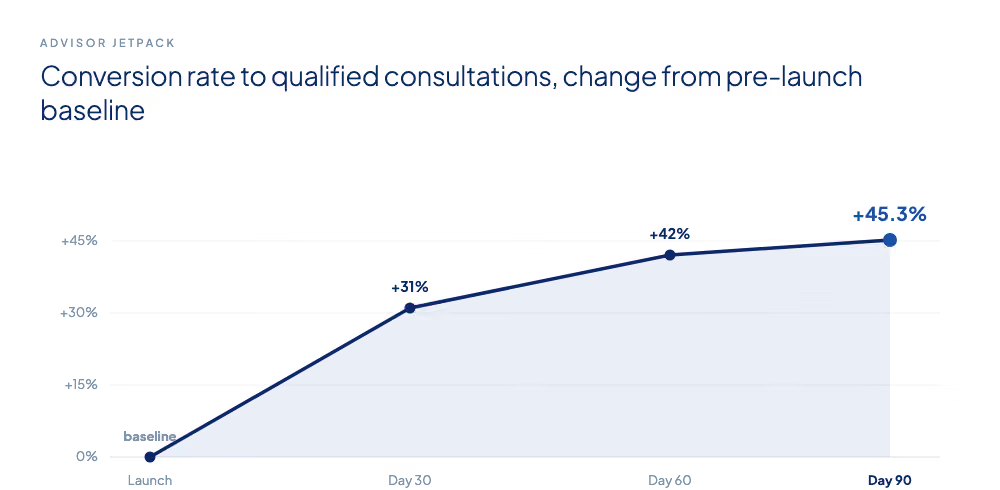
90 days after the Website rebuild went live, the proportion of visitors booking a qualified consultation had risen by 45.3%. The advertising, the targeting and the offer were not adjusted to achieve this result.
Who is Advisor Jetpack?
Advisor Jetpack is a turnkey growth provider for registered investment advisors, connecting advisory firms with new households through paid acquisition and funnel optimisation. Seven years of trading, more than 400 advisors served and over 200 partner firms make them one of the more established names in that market, which is precisely what made the engagement worth documenting. When a marketing company hires an outside firm to improve its own marketing, there is very little room to hide behind a favourable interpretation of the results.
What was going wrong
The business had scaled considerably over several years, and the website had not kept pace with it.
The site was the firm’s weakest trust signal. Financial services is unusual in that a buyer cannot properly assess the quality of what they are purchasing before they purchase it, and frequently not even afterwards. Advice, strategy and acquisition expertise all have to be taken substantially on faith at the point of decision. Buyers respond to that by substituting what they can observe for what they cannot, and the website is almost always the most available proxy.
Research from Stanford’s Web Credibility Project found that 75% of people judge a company’s credibility on the design of its site alone, and that the judgment forms in well under a second.
For Advisor Jetpack the consequences of that judgment were heavier than most. Their prospects are fiduciaries, and a fiduciary who appoints an outside marketing firm is lending that firm their own reputation. Whatever the provider produces will be seen by their clients, read by their compliance officer and attached to their name in public. A prospect in that position is not only asking whether the service works. They are asking whether this is a firm they would be comfortable being associated with, and they begin answering that question from the homepage, long before anyone speaks to them.
The existing site did not help them answer it well. The design, the depth of content and the general quality did not reflect the size or momentum of the business behind it, and a prospect had very little on which to conclude that this was a serious firm with a serious track record. In a market where the entire purchase rests on credibility, the first impression was quietly arguing the opposite case.
The proof existed but was not on the page. They had accumulated years of results, client evidence and case studies, almost none of which appeared anywhere a prospect would encounter it - there were only a few videos available. The firm had every reason to be trusted and almost no visible evidence of it, which is a difficult position to recover from once a visitor has already formed a view.
A direct competitor had drawn level. In a market where a prospect compares two or three providers before committing, having a website that merely matches your closest rival is difficult to distinguish from losing to them. When two firms present themselves as equally credible, the prospect is left to decide on price, on whoever replies first, or on nothing in particular.
The cost of leaving it compounded. During a period of fast growth, an underperforming conversion rate does not stay a fixed cost. It scales in proportion to the traffic arriving at it.
Their brief was specific. Rebuild the front end so that it earns trust rather than undermining it, lift the conversion rate on a funnel that already worked, and produce a best practice guide their network of advisors could apply to their own sites.
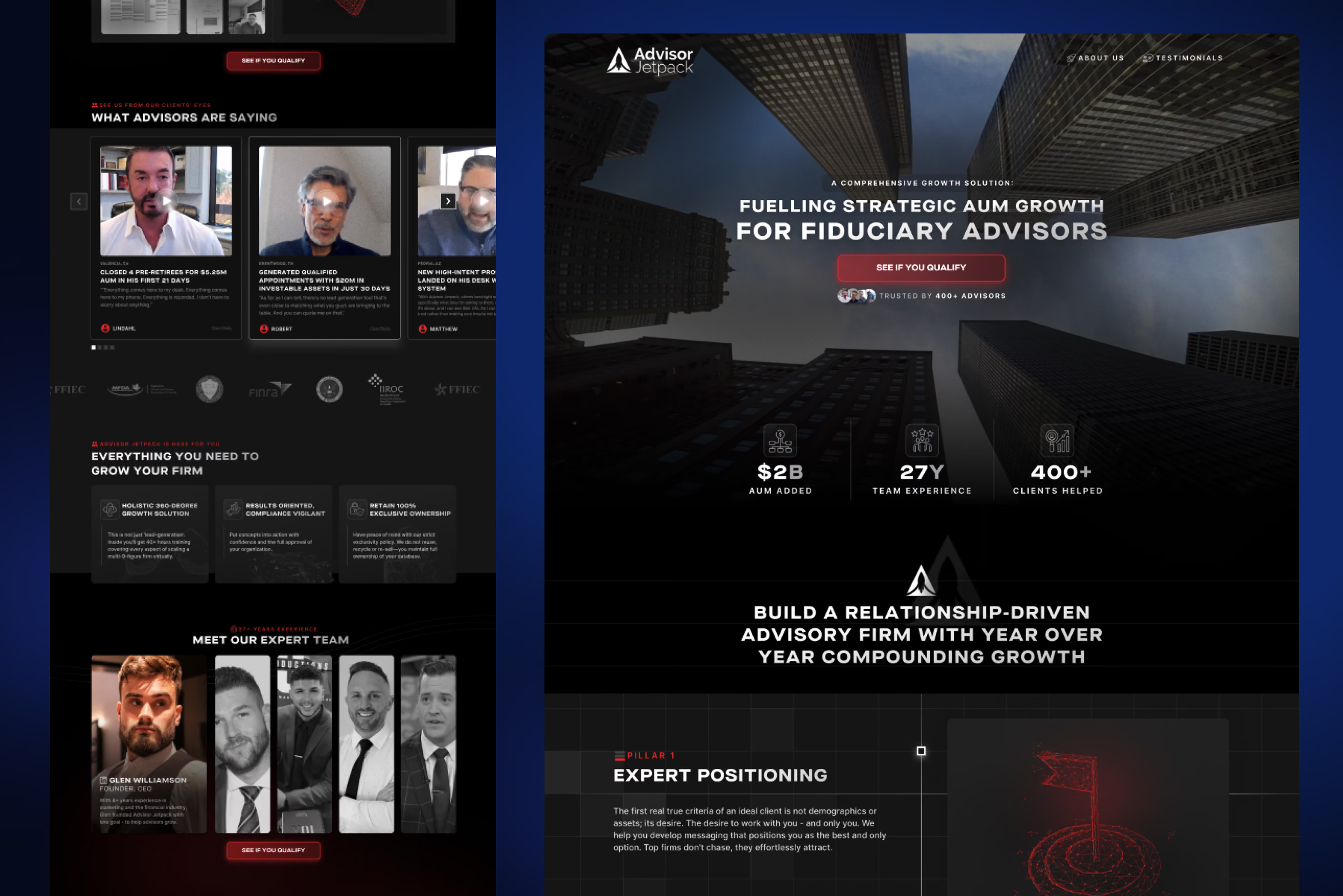
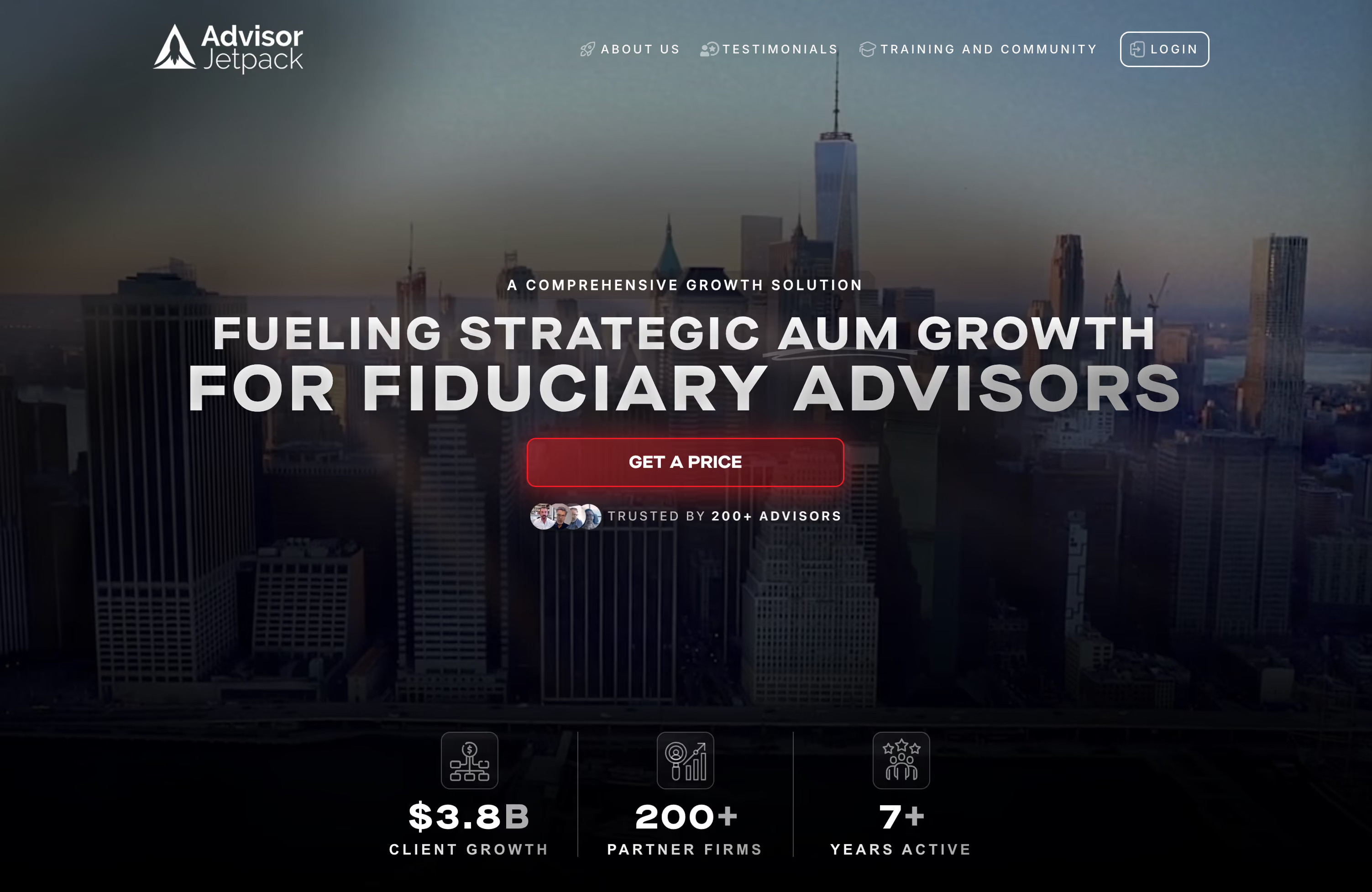
Before the rebuild:

After the rebuild:
What we did
We run every engagement through the same eight stages, each of which exists because the stage before it produces something the next one requires. Run them in a different order and a good deal of the work has to be done twice.
01. Benchmark. We scored the existing site against our twelve point framework and installed conversion tracking on it before replacing anything, then scored their nearest competitors against the same criteria. This is the only point at which a genuine baseline can be captured, and without one it becomes impossible to say afterwards what the new site actually changed. It is also the reason the 45.3% figure is a measurement rather than an assertion.
02. Positioning. Before writing or designing anything we established who the site was for and what that reader was thinking when they arrived. For Advisor Jetpack the answer was a fiduciary who had likely been disappointed by an outside marketing promise before, and whose scepticism the existing copy had never acknowledged.
03. Copy. Every section was rewritten to that reader and to the questions they ask before making contact. Copy was completed before design began, so that the layout could be built around the message rather than the message compressed into a layout that already existed.
04. Design. Brand direction was settled first, covering type, colour, photography and the way credentials and proof are presented. One page was then designed in full, taken to approval, and used as the template for every page that followed.
05. Development. The site was built responsively and phone first, to Google’s Core Web Vitals thresholds, with the migration planned so that no existing URL broke and no search ranking was lost in the transition.
06. Compliance aware build. Advisor Jetpack is not itself a registered adviser, but every claim on its website is read by the compliance officers of the firms it serves. Those claims were structured to survive that review rather than to create work for it.
07. AI visibility and content. The firm’s facts were written and marked up so that ChatGPT, Claude and Gemini can read and quote them accurately, supported by an article programme built around the questions prospects search before they enquire.
08. Split testing. Once the site was live we tested one element at a time, holding each test long enough to read a reliable result, and measured every change against the baseline captured in stage one. This is the stage in which the conversion rate moved. Testing one element at a time takes longer than testing several, but it is the only way to know which change produced the result and therefore which direction to take the next test.
Other sections from the rebuild:
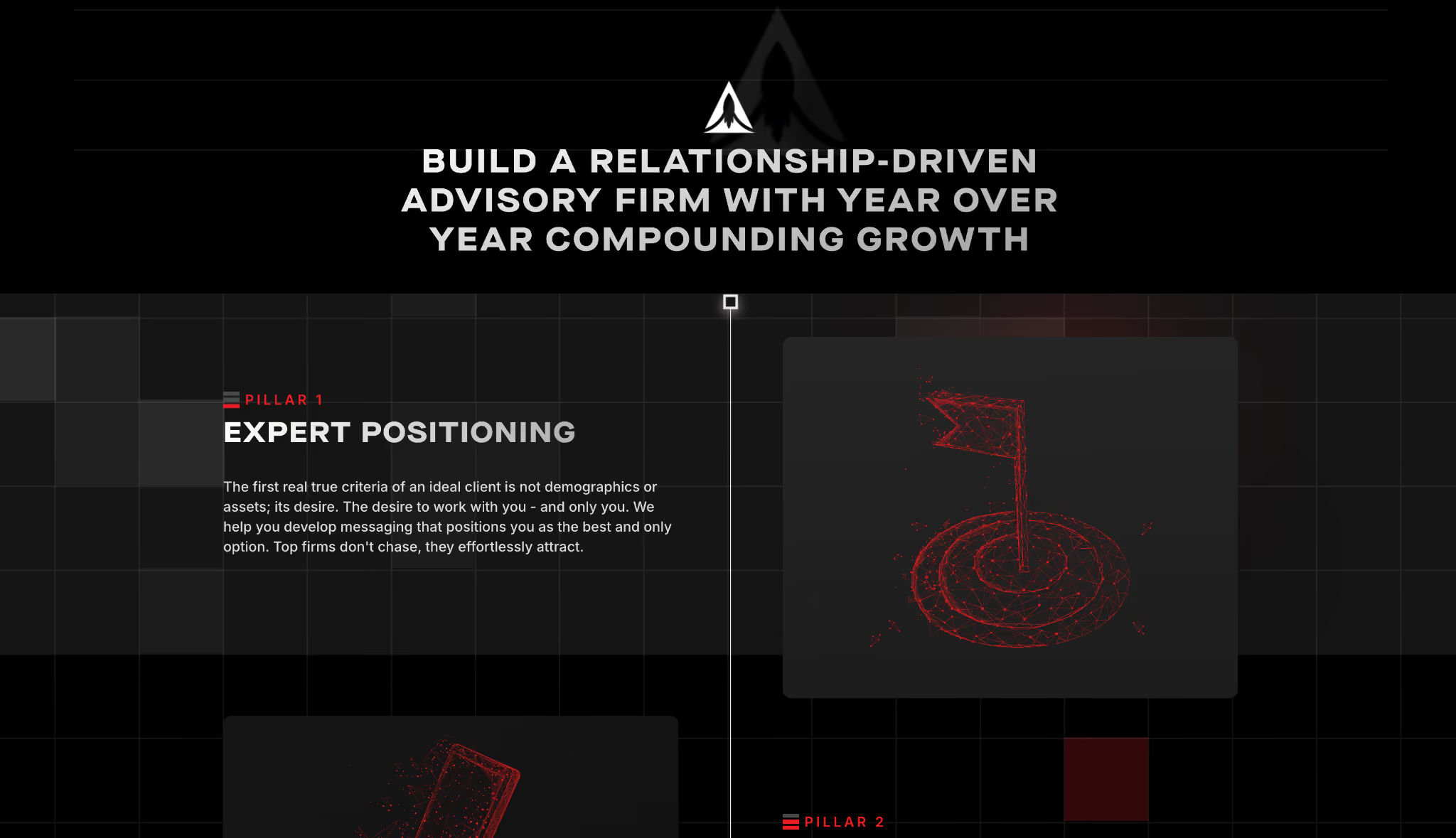
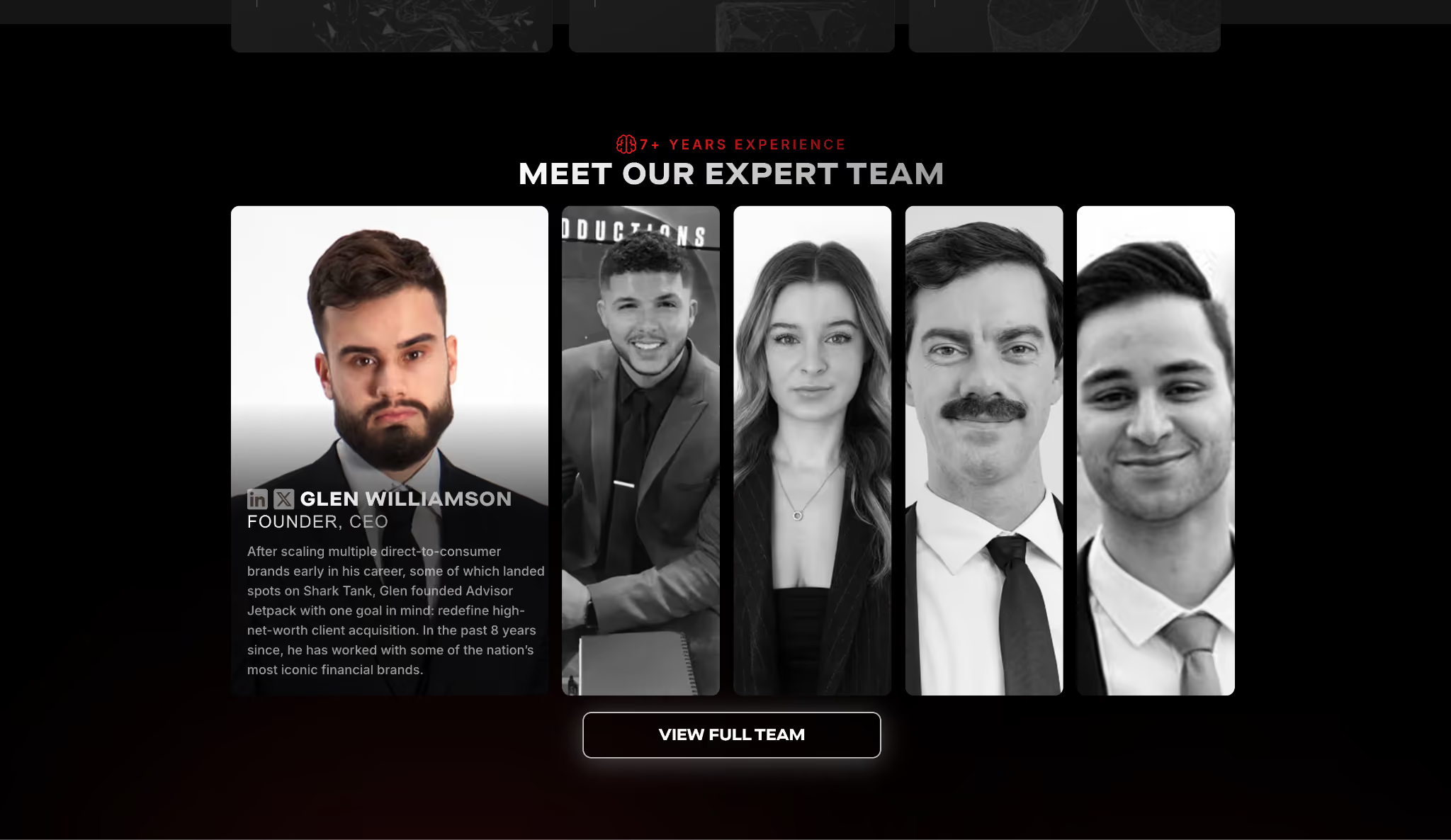
Split Test (1 of 15 ran during the engagement)
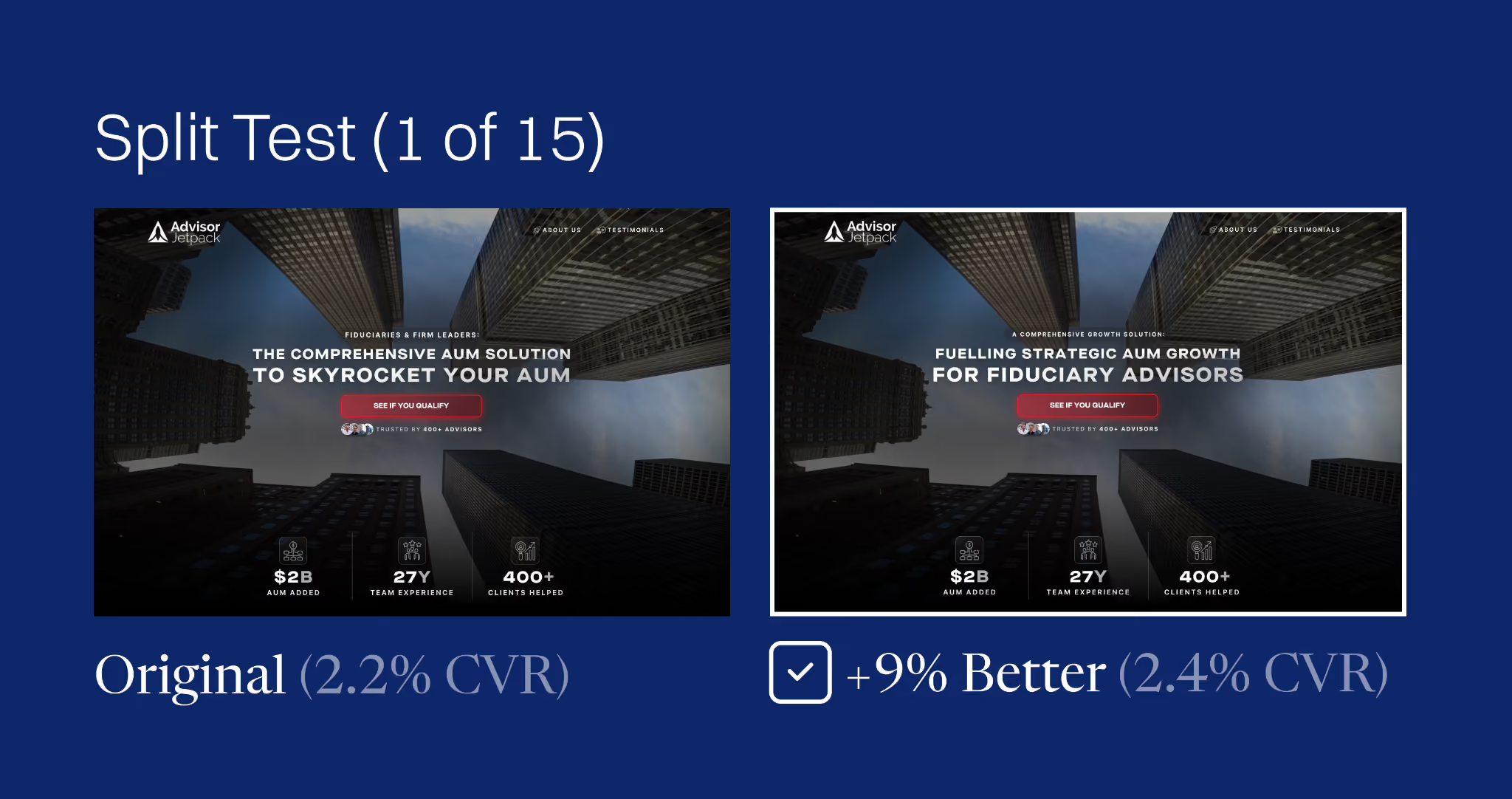
Live Link: AdvisorJetpack.com
The result
Within 90 days the conversion rate to qualified consultations had risen 45.3% compared to the previous website - with the level of qualified being measured automatically by their pre-call survey. Organic search traffic followed at a 41.5% increase, and traffic arriving from AI assistants at 266.7%, both within 150 days of launch.
Because tracking had been installed on the old site before it was replaced, each of those figures is a comparison against a documented starting point rather than an estimate made after the fact.
The commercial consequence was that the cost of booking a qualified appointment fell from $201.10 to roughly $110. Over the same period the firm added approximately $200,000 per month to their bottom line, alongside several of its own concurrent growth initiatives, and we make no claim to sole responsibility for that figure. It is offered as context rather than as a result.
The numbers
- Conversion rate to qualified consultations: 1.6% to 2.32%, an increase of 45.3% within 90 days
- Organic traffic from Google (Per Month): 1,450 to 2,051, an increase of 41.5% within 150 days
- Traffic from ChatGPT and Claude (Per Month): 45 to 165, an increase of 266.7% within 150 days
- Cost per qualified appointment: $201.10 down to $110, a reduction of 45.3%
Our Work, In the words of their Founder
“I want to thank Leo and his team at McIntosh & Co for all of the website work they’ve done for my company.
I’m at a point where I feel like when it comes to funnels, when it comes to ads and marketing, I have everything dialled in. So originally I was quite sceptical about hiring an outside company to actually come in and do work on our website and funnels.
But upon bringing on the team, they were able to surprisingly increase our conversion rate by around 45%, which took our cost per appointment down from about $200 all the way to about $110.
That’s without touching anything apart from the website, and the split tests and optimisations they ran. It really blew me away, the amount they were able to achieve in such a short period of time, and the impact on our revenue.
Highly, highly recommend the team over there.”
Glen Williamson, Founder and CEO, Advisor Jetpack
The playbook
Alongside the rebuild we analysed more than fifty advisory firm websites and distilled the findings into a best practice guide for Advisor Jetpack’s network of advisors, covering the structural, messaging and trust decisions that separate the sites generating qualified enquiries from those that merely exist. That analysis is part of what informs the benchmarking stage of every engagement we now take on.
Why this engagement is worth reading twice
Advisor Jetpack understood their own numbers, had their acquisition working profitably, and reasonably believed the funnel was performing close to its ceiling. The conversion rate improved by 45.3% regardless, because the website was the one component of that funnel nobody had ever measured against a baseline or systematically tested.
It is also the component doing the most work that nobody sees.
Every other part of an acquisition process can be observed and adjusted, but the moment a prospect forms a view of whether a firm is credible happens silently, in a second or two, before any conversation has begun. In a market built entirely on trust, that is not a design question. It is the first and most consequential part of the sale.
Most advisory firms are in a similar position. Very few have the tracking in place to know it, and most are overdue a design upgrade compared to their total AUM.
McIntosh & Co builds the highest level websites for advisory and investment firms, increasing their standing as the considered choice amongst ideal-fit HNW and UHNW prospective clients.
Work with us on your website:

Web design to match your prospective clients' expectations
Schedule a Consultation directly with our Head Designer to learn about our process and get an audit on your current site.